
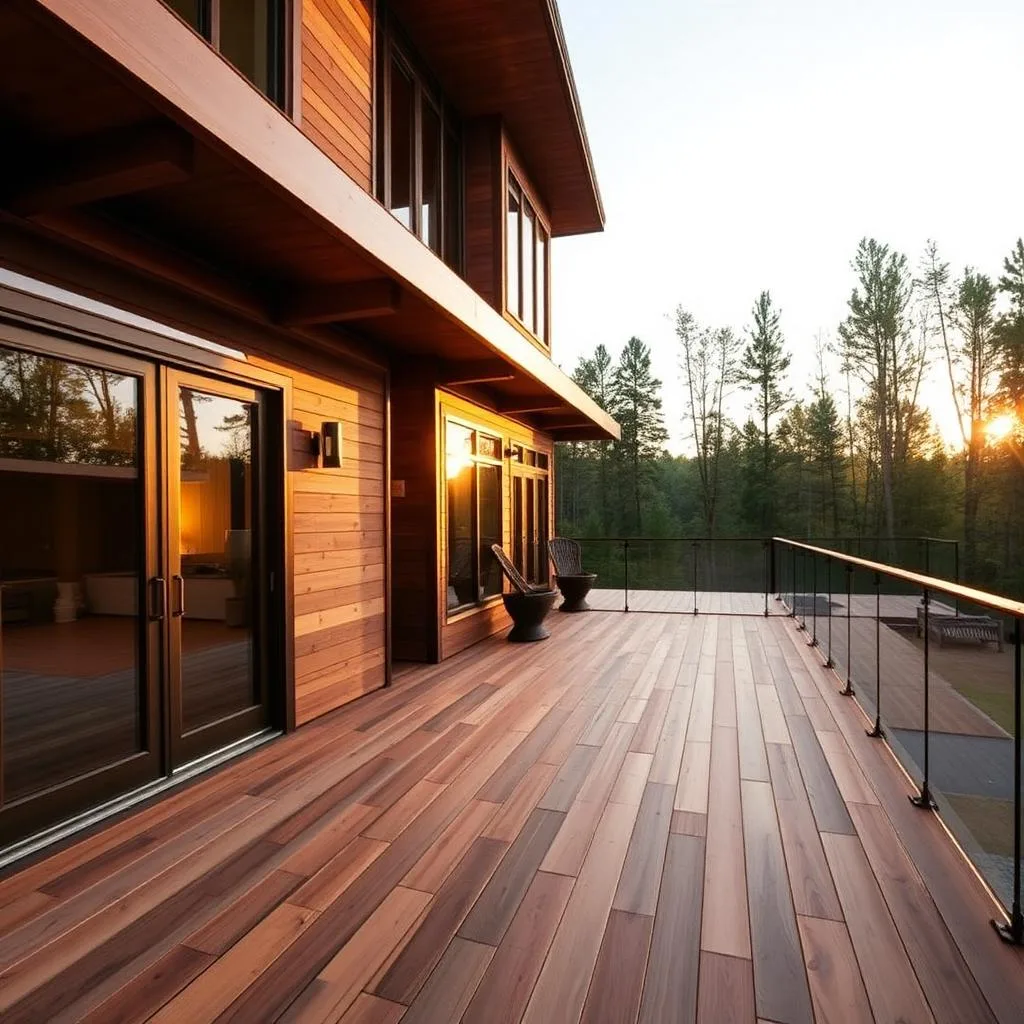
White Lake Township has 21 inland lakes, and most of the homes worth sitting outside at face the water. White Lake itself, Pontiac Lake, Oxbow, Bogie, and the smaller lakes in between are lined with homes where the deck is the most-used room in the house from May to October. If you are planning one, here is the short version: a lakefront deck is built the same way as any good deck, with footings below the frost line and a properly attached ledger, but the lot changes almost every decision around it.
Here is what to think through before you sign anything.
Why lake lots are harder to build on
Lake lots in White Lake tend to share a few traits. They slope toward the water, sometimes steeply. The soil near the shore is wetter, and the water table sits closer to the surface. Many were first built as small cottages and have been added onto over the decades. And a lot of them are on well and septic. Each of those affects where a deck can go, how tall it is, and how it is built.
- —Slope. A yard that falls toward the lake usually means a taller deck off the main floor, longer posts, more bracing, and stairs down to the yard.
- —Wet ground. Footings near the water have to be set below frost in soil that may hold water. Poor drainage around the footings is how decks start to heave and lean.
- —Well and septic. Septic fields and wells have required setbacks. A deck, its footings, and the equipment used to build it all have to stay clear of them.
- —Access. Narrow side yards and steep drops make it harder to get materials and equipment to the back of the house. That affects time and cost.
Footings are where lakefront decks fail
In Michigan, deck footings go below the frost line, about 42 inches. On a lake lot that rule matters even more, because the ground is wetter and freezes harder. A footing that stops short gets lifted a little every winter. One post rises, the next does not, and within a few years the deck has racked and the door to the house sticks.
On sloped lots, each footing also has to sit on firm, undisturbed soil, not on fill that was pushed downhill when the house was built. We check that as we dig. We also grade around the deck so rain and snowmelt move away from the footings and the foundation instead of soaking in next to them.
Plan the deck around the view and the weather
A lakefront deck faces a few things a subdivision deck does not.
- —Sun and glare off the water. West-facing decks over a lake get hot in the late afternoon. Lighter decking colors stay cooler than dark ones, and a shade structure or pergola can make the space usable in July.
- —Wind. Open water lets wind build up. Solid railings block it but also block the view. Cable and glass-style railings keep the view open, and taller decks need railings rated and attached to code.
- —The view line. Most people want to see the water from a chair, not just standing up. Railing style and deck height decide whether the top rail cuts right through the view.
- —Moisture. Lake air is humid, and decks near the water stay damp longer. Composite and PVC decking resist that well. Hardware and fasteners should be coated or stainless and rated for outdoor use.
Composite or cedar on the water?
Both can work. Cedar is warm and less expensive up front, but near the water it grays and needs cleaning and refinishing every couple of years to stay healthy. Composite costs more up front, never needs stain, and handles moisture and freeze-thaw well, which is why most of our lakefront decks use it. If you like the look of wood but not the upkeep, many composite lines come in wood-toned colors that hold up to the sun. Our composite vs. cedar comparison goes deeper.
Multi-level decks and stairs to the water
On a sloped lake lot, one big deck is rarely the best answer. A deck at main-floor level off the kitchen, with stairs to a lower deck or a paver patio near the walkout, gives you two spaces and steps the whole thing down the hill. It also keeps any one deck from getting too tall.
Stairs that lead toward the shoreline need special care. They should have consistent step heights, a landing every so often on long runs, lighting for night use, and railings where code calls for them. Where the slope is steep, a short retaining wall or terraced steps can make the walk to the water safer than a long run of open stairs.
Permits and lake rules
In Oakland County, an attached deck, and most freestanding decks, needs a building permit and inspections, including a footing inspection before concrete is poured. White Lake Township issues its own permits, and your plan may need to show property lines, setbacks, and where the well and septic sit.
Work at the water's edge is a separate matter. Building anything into the lake or at the shoreline, such as a seawall or anything below the normal high-water line, falls under state rules for inland lakes, administered by Michigan's Department of Environment, Great Lakes, and Energy (EGLE). A deck built on dry land up the slope generally does not. If your plan touches the shoreline itself, check first. Some subdivisions and lake associations also have their own rules about structures near the water.
What a lakefront deck costs
Most custom decks we build in the Lakes Area land between roughly $35 and $70 per square foot. Lakefront decks often sit toward the higher end of that range because of height, stairs, railing choices, and access. A multi-level lakefront deck with lighting and premium railing can run past $40,000. Our deck cost guide breaks down what moves the number, and we give you a fixed written price after we walk the lot.
Questions to ask any deck builder about a lake lot
- —How deep will the footings go, and what will they sit on?
- —How will you handle drainage around the footings and the house?
- —Where are my well and septic, and how will you stay clear of them?
- —How will the deck attach to the house, and how will the ledger be flashed?
- —Who pulls the permit, and is it included in the price?
- —How will you get materials and equipment to the back of the lot?
Talk to a crew that builds the whole slope
Michigan Outdoor Creations builds decks, retaining walls, paver patios, and drainage across White Lake, Waterford, Commerce, and the rest of Oakland County's lake country. Because one crew handles all of it, we can plan the deck, the stairs, the walls, and the water management as one project. We will walk your lot with you, show you where the footings and stairs can go, and give you a fixed written price.
Call 248-916-6012 or request a free on-site estimate.
Common questions
Do I need a permit to build a deck on a lake lot in White Lake?
Attached decks and most freestanding decks in Oakland County need a building permit and inspections. White Lake Township issues its own permits. Work at the shoreline or in the lake itself falls under separate state rules.
How deep do deck footings need to be on a lakefront lot in Michigan?
Below the frost line, about 42 inches, and on firm, undisturbed soil. Wet lakefront soil makes proper depth and drainage even more important.
Is composite or cedar better for a deck near the water?
Both can work. Composite handles moisture and freeze-thaw with almost no upkeep, which is why it is the most common choice for lakefront decks. Cedar costs less up front but needs regular refinishing.
Can you build a deck near a septic field?
A deck and its footings must stay clear of the septic system and well setbacks. We locate both before planning the layout.
How much does a lakefront deck cost?
Most custom decks in the Lakes Area run about $35 to $70 per square foot. Lakefront decks often land toward the higher end because of height, stairs, and access.