
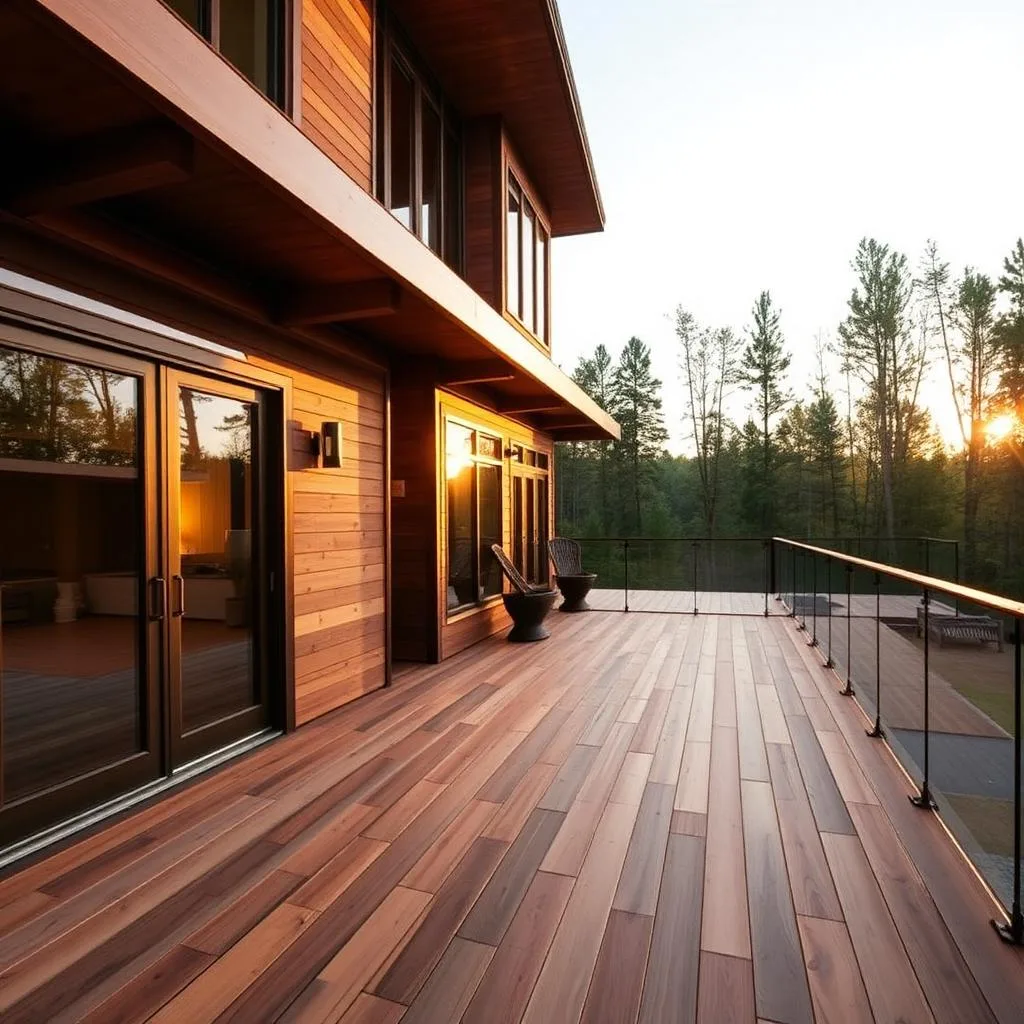
Plenty of decks around Oakland County have been through twenty or more Michigan winters of snow load, freeze-thaw, and spring rain. Some are still solid underneath and just look tired. Others are in worse shape than they look from the surface. The hard part for homeowners is telling which is which.
Here is a simple walk-through you can do yourself, what each problem usually means, and how to decide between repairing, resurfacing, and replacing.
Why the structure matters more than the boards
Most people judge a deck by its surface: faded boards, splinters, a wobbly step. Those are real problems, but they are usually the cheap ones. What decides whether a deck is safe is the structure underneath: the ledger board that attaches the deck to your house, the posts and footings that hold it up, and the joists that carry the boards.
The ledger connection is the big one. The North American Deck and Railing Association (NADRA) estimates that about 90 percent of deck collapses come from a failure where the deck attaches to the house. NADRA also estimates that roughly 30 million decks in North America have outlived their practical service life, and recommends a professional inspection for any deck built more than 15 years ago.
A walk-through you can do yourself
You will need a flashlight and a screwdriver. If you can safely get under the deck, do it. Never climb on or under a deck that already feels unsafe.
- —Check the ledger. Look where the deck meets the house. It should be attached with bolts or structural screws, with metal flashing over the top to keep water out. If you only see nails, or the wood is dark, soft, or pulling away from the house, that is a serious problem.
- —Probe the wood. Push a screwdriver into the ledger, the ends of the joists, and the bottoms of the posts. Sound wood resists. If the tip sinks in easily, that wood is rotting.
- —Look at the posts and footings. Posts should sit on concrete footings, not buried directly in the dirt. If posts are leaning, sinking, or the deck has pulled up unevenly, the footings may be too shallow and are being lifted by frost.
- —Check the hardware. Joist hangers, bolts, and brackets should be solid, not rusted through or missing fasteners.
- —Test the railing. Push firmly on the railing posts and top rail. They should not move. A loose railing is a real safety problem, especially on a raised deck.
- —Walk the surface. Note boards that are soft, cracked, cupped, or popping their screws or nails, and any spots that bounce more than the rest.
What each problem usually means
Surface problems only. Worn, splintered, or cupped boards on a solid frame are the good news. Those boards can be replaced, or the whole surface can be redone on the existing frame.
Loose or short railings. Railings can often be rebuilt or replaced on their own. Keep in mind that current code generally requires guards at least 36 inches tall on decks more than 30 inches above the ground, with balusters close enough together that a 4-inch sphere cannot pass through. Many older decks do not meet that, and a replacement railing would need to.
Rot in a few joists. Isolated joist damage can sometimes be repaired by adding new joists alongside the damaged ones. Widespread rot is a different story, because it usually means water has been getting into the whole frame for years.
Ledger problems. A nailed-on ledger with no flashing, or a ledger with rot, is a safety issue. Fixing it properly usually means taking the decking off that area, correcting the attachment, and flashing it. On many older decks, that work adds up to a large share of the cost of a new deck.
Footings that heave or sink. In Michigan, footings need to go below the frost line, which is about 42 inches deep. Older decks were often built on shallow footings or on posts set directly in the soil. If the deck moves every winter, the fix is new footings, which on most decks means taking much of the structure apart anyway.
The middle option: resurfacing
If the frame is sound, resurfacing can make sense. That means keeping the structure and putting new decking and railings on top. It costs less than a full rebuild and gives you a deck that looks new.
It only works if the frame passes a careful inspection. A few things to know:
- —Many composite decking brands call for joists closer together than older wood decks were built, especially for diagonal board patterns. Check the manufacturer's requirements for the product you want before assuming your frame will work.
- —Old framing lumber has already spent decades in the weather. Putting 25-year composite boards on a frame that has ten good years left is not always a bargain.
- —Before new boards go down, joist tape on top of the joists and ledger helps keep water out of the screw holes.
When replacing is the smarter money
Replacement usually makes more sense when:
- —The ledger or footings are the problem, since fixing either means taking the deck apart.
- —Rot is spread through the joists, not in one or two spots.
- —The deck is 20 or more years old and needs several repairs at once.
- —You want a different size, shape, or layout, or a low-maintenance material.
- —The railings, stairs, and structure all need to be brought up to current code anyway.
A new deck also gets you a structure built to today's standards: footings poured below the 42-inch frost line, a properly bolted and flashed ledger, and code-compliant railings. In Oakland County, a replacement deck generally needs a permit and inspections, the same as a new one.
What it costs
A few replaced boards or a railing repair is a modest job. A full resurface costs less than a rebuild, because the frame stays. A complete replacement costs about the same as a new deck. In the Lakes Area, most new decks we build land between roughly $35 and $70 per square foot, depending on the material, height, and railing system. Our full deck cost guide breaks down what moves that number.
Get a straight answer on your deck
If your deck has you wondering, the best next step is to have someone look at the structure, not just the surface. Michigan Outdoor Creations builds decks across Walled Lake, Commerce, Novi, and the rest of Oakland County on footings below the frost line, with ledgers bolted and flashed to code. We will walk your deck with you, check the ledger, footings, and framing, and tell you plainly what we find. If a new deck is the right call, you get a fixed written price before anything is torn out.
Call 248-916-6012 or request a free on-site estimate.
Common questions
How long does a wood deck last in Michigan?
It depends on how it was built and maintained. NADRA recommends a professional inspection for any deck built more than 15 years ago, since many older decks predate current connection and hardware standards.
Can I put new composite boards on my old deck frame?
Sometimes. The frame has to be structurally sound, and many composite products call for closer joist spacing than older decks were built with. Have the frame inspected first.
What is the most dangerous deck problem?
A failing ledger, the board that attaches the deck to the house. NADRA estimates that about 90 percent of deck collapses start at that connection.
Do I need a permit to replace a deck in Oakland County?
Yes, a replacement deck generally needs a permit and inspections, the same as a new deck.
How deep should deck footings be in Michigan?
About 42 inches, below the frost line. Shallower footings can be lifted by frost every winter.